How to Withdraw USDT to Card in Indonesia
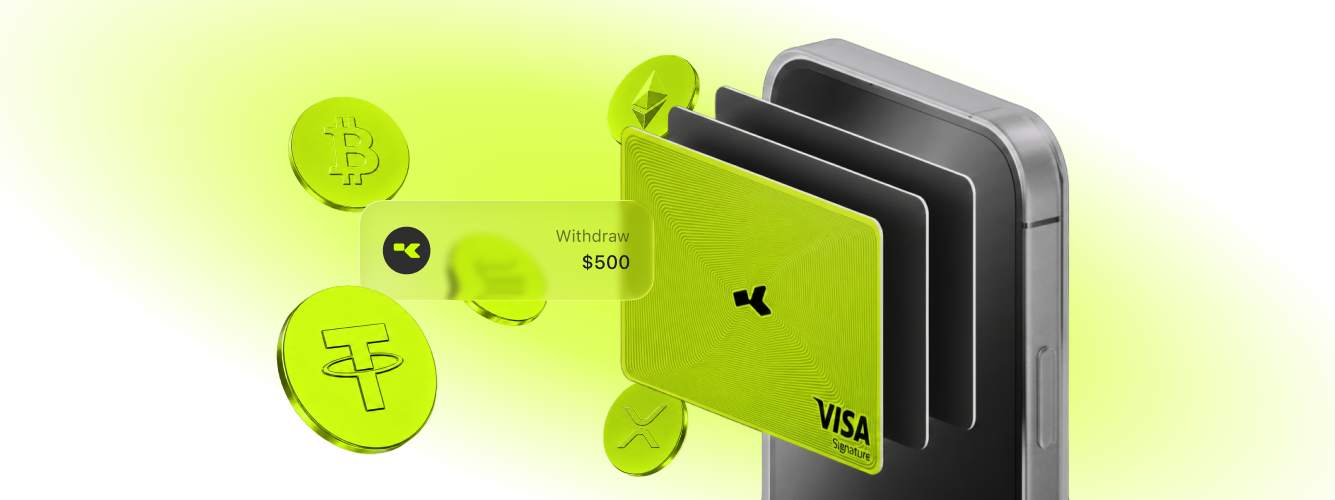
Holding USDT is easy. Using it in everyday life in Indonesia is where many users get stuck.
Hotels, restaurants, supermarkets, travel platforms, online services, ride-hailing apps, software subscriptions, and local bills still run through fiat payment rails. In Indonesia, that usually means IDR, local bank transfers, QRIS, debit cards, credit cards, or international card networks.
That is why many people search for the same thing: how to withdraw USDT to a card in Indonesia.
But the wording is not quite accurate.
You do not withdraw USDT directly to an Indonesian bank card in the same way you send money to a bank account. USDT is a blockchain asset. A bank card or card terminal does not receive TRC-20, ERC-20, Polygon, Base, Arbitrum, Solana, or other token transfers as card money.
In practice, there are two main ways to make USDT usable in Indonesia:
- Top up a crypto-funded card with USDT or USDC, then spend through Visa.
- Sell USDT for IDR, then withdraw to an Indonesian bank account or local bank card.
Both routes can work. The right choice depends on what you need next.
If your goal is to pay for travel, accommodation, online services, software, subscriptions, or everyday card payments without repeating a manual cash-out every time, Karta is built for that.
If you need IDR in an Indonesian bank account for QRIS, local transfers, rent, utilities, or cash withdrawals, use an exchange or P2P cash-out route.
Get Karta and turn USDT or USDC into a Visa balance you can actually use.
The Short Answer
If your final goal is spending, a bank withdrawal may be an unnecessary extra step.
With Karta, you top up your account with USDT or USDC, activate a Visa card, and use your stablecoin-funded balance for eligible card payments. You are not withdrawing USDT directly to a bank card in the literal blockchain sense. You are turning stablecoins into spendable card balances.
That distinction matters. It helps you avoid failed withdrawal expectations, unnecessary bank steps, and repeated exchange-to-bank cash-outs.
If you need fiat in an Indonesian bank account, the more direct route is different: sell USDT for IDR on a local exchange or through P2P, then withdraw the IDR to a verified bank account.
Indonesia’s payment rules also matter. Bank Indonesia states that Rupiah is the only legal tender in Indonesia and that virtual currencies are not recognized as legitimate payment instruments in the country.
At the same time, crypto assets can be traded through regulated digital financial asset platforms. OJK has issued regulations for trading digital financial assets including crypto assets, and Indonesia’s licensed crypto trader list includes major local names such as Tokocrypto and Indodax.
So the practical question is not only: “How do I withdraw USDT?”
For many users, the better question is: “Do I need an IDR in a bank account, or do I just need to spend my stablecoins?”
That is where Karta fits.
Can You Withdraw USDT Directly to a Card in Indonesia?
Not directly.
A card is connected to fiat payment rails. USDT lives on blockchain networks. For a card payment to happen, something in the middle has to convert, settle, or spend value through a payment provider.
So when users say “withdraw USDT to card in Indonesia,” they usually mean one of these outcomes:
| Need | Use | Why |
|---|---|---|
| Regular card payments | Karta | Spend from a stablecoin-funded Visa balance |
| Hotels, travel, SaaS, ads, tools, and subscriptions | Karta | Avoid repeated exchange-to-bank cash-outs |
| Tourist or nomad spending without local banking | Karta | Use a crypto-funded card instead of opening an Indonesian bank account |
| IDR in an Indonesian bank account | Local exchange withdrawal | Direct IDR settlement |
| QRIS, local bills, and bank transfers | Indonesian bank account | Domestic payment rails are usually needed |
| One-off local sale | P2P | Flexible, but counterparty risk applies |
| Large IDR conversion | Exchange or OTC-style route | Better suited for high-volume cash-outs |
If you need a spendable card balance, Karta is usually the cleaner route.
If you need IDR in a local bank account, an exchange or P2P route is usually the better fit.
Option 1: Use Karta to Spend USDT or USDC Through Visa
This is the route for users who do not want to cash out manually every time they need to pay.
Karta is built for people who already hold USDT or USDC and want to use those funds without sending them through an exchange and Indonesian bank account first. You top up your Karta balance, activate a Visa card, and spend on eligible card payments such as hotels, flights, subscriptions, software, online tools, business travel, restaurants, and everyday expenses.
The flow is short:
USDT or USDC → Karta balance → Visa payment
Instead of:
USDT → exchange → IDR → Indonesian bank account → local bank card → payment
That is the core benefit: fewer steps between receiving stablecoins and actually using them.
Karta supports stablecoin funding with USDT or USDC on networks including Tron, Ethereum, BNB Smart Chain, Polygon, Arbitrum, Optimism, Base, and Solana. Karta’s public fee information lists a 5 USDT virtual Visa activation fee and 1.5% card payments. Crypto top-ups are free on most supported networks, while Tron top-ups carry a 5.90 USDT fee and a 15 USDT minimum top-up amount. For ATM withdrawals, Karta lists 1 USDT + 2.5% for successful withdrawals and 1 USDT for declined ATM withdrawals.
Karta is not the same as withdrawing IDR to an Indonesian bank account. It solves a different problem: making stablecoins usable for card payments.
For example, if you receive USDT from international clients and need to pay for hotels, ad accounts, business travel, software, or subscriptions while staying in Bali, Jakarta, or elsewhere in Indonesia, Karta can be faster than selling USDT, waiting for an IDR bank withdrawal, and then paying with a local bank card.
Get Karta and spend stablecoins through Visa without the usual exchange-to-bank detour.
Option 2: Sell USDT for IDR and Withdraw to an Indonesian Bank Account
Use this route when your goal is to receive IDR inside a local Indonesian bank account.
The typical workflow is simple:
- Deposit USDT into an exchange account.
- Sell USDT for IDR.
- Add and verify your Indonesian bank account.
- Request an IDR withdrawal.
- Spend from your local bank account, debit card, QRIS-enabled app, or bank transfer.
This method is useful when you need bank-settled IDR for rent, local invoices, utility bills, domestic transfers, ATM cash, or QRIS payments.
QRIS is especially important in Indonesia. Bank Indonesia describes QRIS as the national QR Code payment standard used to facilitate payment transactions in Indonesia, including payments through bank and non-bank payment applications.
That is why a local bank or payment app can still matter. Karta is strong for Visa-based card spending, but QRIS, local bank transfers, and certain domestic bill payments may still require IDR in a local banking or payment account.
Indodax
Indodax supports IDR/Rupiah withdrawals to bank accounts. Its fee information currently lists Rupiah withdrawal fees separately, and its help center states that the current Rupiah withdrawal fee is 10,000 rupiah for all withdrawal amounts.
The practical route is:
USDT → IDR conversion → IDR withdrawal to Indonesian bank account
This can be a good option for Indonesian residents who already have local banking access and need IDR rather than card spending from stablecoins.
Tokocrypto
Tokocrypto also supports IDR withdrawal workflows. Its support materials list a Rp10,000 withdrawal fee and describe fiat withdrawal processing to a bank account.
The practical route is similar:
USDT → IDR conversion → IDR withdrawal to Indonesian bank account
This is useful when your endpoint is local IDR liquidity, not a crypto-funded card balance.
Before using any exchange route, check the final withdrawal preview, supported bank method, KYC status, account eligibility, limits, taxes, and current fees.
Option 3: Use P2P to Sell USDT for IDR
P2P is another common way to cash out USDT in Indonesia.
The idea is simple: you sell USDT to another user through a marketplace, the buyer sends IDR to your bank account, and the platform releases the crypto once payment is confirmed.
P2P can be fast and flexible. It may also offer competitive rates depending on market demand. But it comes with trade-offs.
You depend on the counterparty, payment timing, sender name matching, transfer references, bank review risk, and the platform’s dispute process.
P2P can work for occasional local cash-outs if you understand the risks and use proper escrow. But for recurring expenses, business spending, travel, and repeatable workflows, it is usually less clean than either a local exchange withdrawal or a card-based spending setup.
If your goal is simply to spend USDT through a card, Karta avoids the P2P counterparty step entirely.
Karta vs IDR Cash-Out: Which One Should You Use?
Start with the outcome.
Use Karta when your real need is not “send IDR to my Indonesian bank account,” but “make my stablecoins usable for payments.”
Use a local exchange or P2P route when you need IDR in a bank account.
For many users, the smartest setup is both: Karta for Visa-based payments, and a local IDR route for QRIS, bank transfers, rent, and domestic-only payment flows.
| Situation | Better route |
|---|---|
| You need to pay hotels, travel platforms, subscriptions, ads, or software | Karta |
| You are a tourist or nomad without an Indonesian bank account | Karta |
| You receive USDT and want to spend gradually | Karta |
| You need QRIS or local bank transfers | IDR bank account |
| You need rent or utility payments through local rails | Exchange or P2P cash-out |
| You want a one-off IDR sale | P2P |
| You need large IDR settlement | Exchange or OTC-style route |
Karta is strongest when the goal is spending.
Exchange and P2P routes are strongest when the goal is local IDR settlement.
Fees, Limits, and Networks to Check
Do not compare only the visible withdrawal fee. Compare the full cost of the route you are actually using.
Depending on the method, the total cost can include:
- blockchain network fees
- exchange spreads
- trading fees
- IDR withdrawal fees
- card payment fees
- ATM fees
- FX or international transaction fees
- P2P spreads
- tax treatment
- service fees from an off-ramp or card provider
A low advertised withdrawal fee does not always mean the cheapest or smoothest route. P2P can have no visible platform fee but a weaker rate or more risk. Bank withdrawals can be cheap but require more steps. Card spending can cost a percentage per transaction but removes the need to cash out manually before every payment.
Before topping up Karta, check both the network and the fee. Most supported networks are free for crypto top-ups, but Tron top-ups currently carry a 5.90 USDT fee and a 15 USDT minimum top-up amount.
For ATM withdrawals, check whether the withdrawal is successful or declined. Successful ATM withdrawals currently cost 1 USDT + 2.5%, while declined ATM withdrawals cost 1 USDT.
Before moving funds, check five things:
- fees
- limits
- supported networks
- processing time
- account eligibility
Network choice matters too. USDT exists on multiple blockchains, and sending tokens on the wrong network can lead to delays or loss of funds.
TRC-20 is popular because many users are familiar with it, but the best network is the one supported by both your wallet and the receiving platform, with clear fees shown before confirmation.
Compliance in Indonesia: Keep the Flow Clean
Indonesia has a regulated crypto trading framework, but that does not mean crypto can be used directly as money at local merchants.
Bank Indonesia has stated that Rupiah is the only legal tender in Indonesia and that virtual currencies are not recognized as legitimate payment instruments. OJK regulates the trading of digital financial assets including crypto assets, and official exchange lists should be checked before using any local platform.
For users, the practical lesson is simple: use verified accounts, keep clean records, and understand the difference between trading crypto, cashing out crypto, and paying for goods or services.
Keep records of wallet transaction hashes, exchange trades, IDR withdrawal confirmations, invoices or contracts showing source of funds, bank statements, and card statements for business expenses.
This matters especially for freelancers, agencies, traders, founders, digital nomads, and residents receiving stablecoin payments.
Tax Notes for Indonesia Users
Crypto tax treatment in Indonesia can change, so users should check current tax rules before trading or cashing out. Indonesia updated tax treatment for crypto transactions in 2025, including changes to transaction tax rates and VAT treatment. Reuters reported that from August 1, 2025, Indonesia increased tax rates on cryptocurrency transactions, with different treatment for domestic and overseas exchanges.
Private spending is different from business income, trading activity, mining, or recurring professional income.
If USDT is part of your business income, freelance revenue, trading activity, or company treasury, keep records and speak with a qualified tax adviser.
Common Mistakes When Withdrawing USDT to Card in Indonesia
The most common mistakes are:
- thinking USDT goes directly to a bank card
- assuming crypto can be used as direct payment in Indonesia
- choosing P2P only because the rate looks better
- ignoring local IDR, QRIS, and bank requirements
- sending USDT on the wrong network
- forgetting that Tron top-ups may carry a separate fee
- assuming every card route, exchange route, and bank route works the same way
A better P2P rate is not always better execution. Counterparty risk, delays, disputes, bank reviews, and unclear payment references can cost more than the visible spread.
And if you receive regular IDR transfers from unrelated individuals with unclear references, your bank may ask questions.
Final Takeaway
Withdrawing USDT to card in Indonesia is not difficult, but the wording can be misleading.
You are usually not withdrawing USDT directly to a bank card. You are either funding a card balance and spending through Visa, or converting USDT into IDR and withdrawing to a local bank account.
For everyday spending, travel, hotels, subscriptions, online payments, ads, software, and business expenses, Karta offers the shorter workflow:
Top up with USDT or USDC, activate your Visa card, and spend from your stablecoin-funded balance.
For IDR bank withdrawals, local exchange routes such as Indodax or Tokocrypto, or P2P routes, may be more appropriate for eligible users who need funds in an Indonesian bank account.
Need IDR in your Indonesian bank account? Use an exchange or P2P cash-out route.
Want to keep value in stablecoins and spend it through a card? Use Karta.
Top up Karta with USDT or USDC, activate your Visa card, and make your stablecoins ready for travel, subscriptions, online payments, and everyday spending in Indonesia.